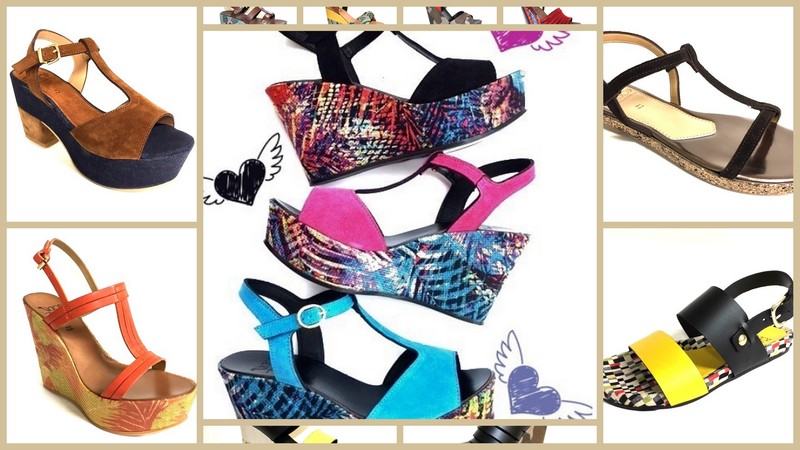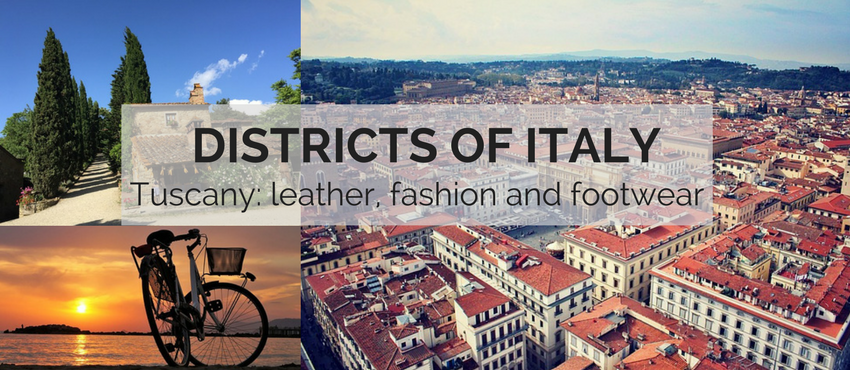
We have chosen to talk to you about a very large and particular district that is not so much distinguished for the final product, but for the material used. We are talking about the Tuscany leather district, a very large reality that holds together shoe factories, bag makers and accessories and tanning specialists.
Compared to other districts, the Tuscany one is extremely wide, and different city departements are involved: Arezzo (leather and shoes from Valdarno Superiore), Firenze (shoes from Empoli), Pistoia (shoes from Valdinievoli).
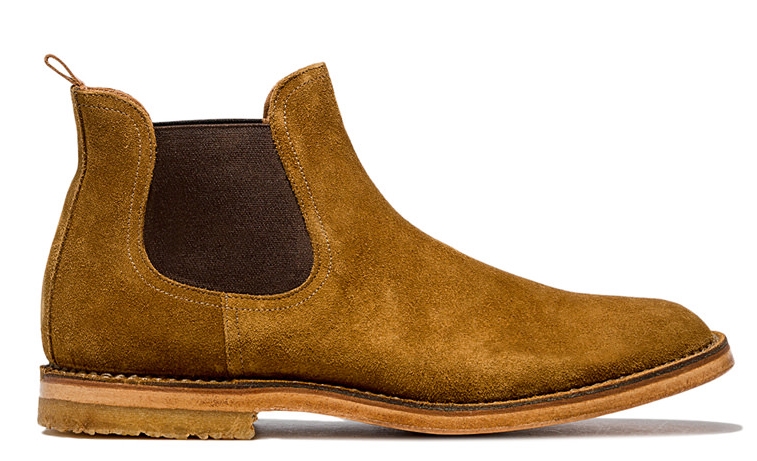
All these areas are famous not only for the production of similar products (bags or shoes) but especially for the same material used, the leather. In fact, Tuscan footwear district is linked with the leather one, creating high-quality products and at least one unique manufacturing district.
Compared to other districts such as the footwear district of the Riviera del Brenta, or that of Fermo and Macerata in the case of the Tuscany district we cannot speak of hyper-specialization on the final product. The focus is the material, well manufactured at the point that has become an icon called "Tuscan leather".
The Tuscan "system" involves more than 22 thousand companies and 100 thousand specialized operators, in an entrepreneurial scenario in which collaborates artisans, contractors, big brands almost always united by the same target: fashion and the high level of production.
TUSCAN LEATHER: MORE THAN A TRADITION
Leather processing in Tuscany has always been of great importance. The most precious works with leather come from Tuscany since centuries, and even today leather is essential for Tuscany: there are schools to learn how to cut and decorate the leather.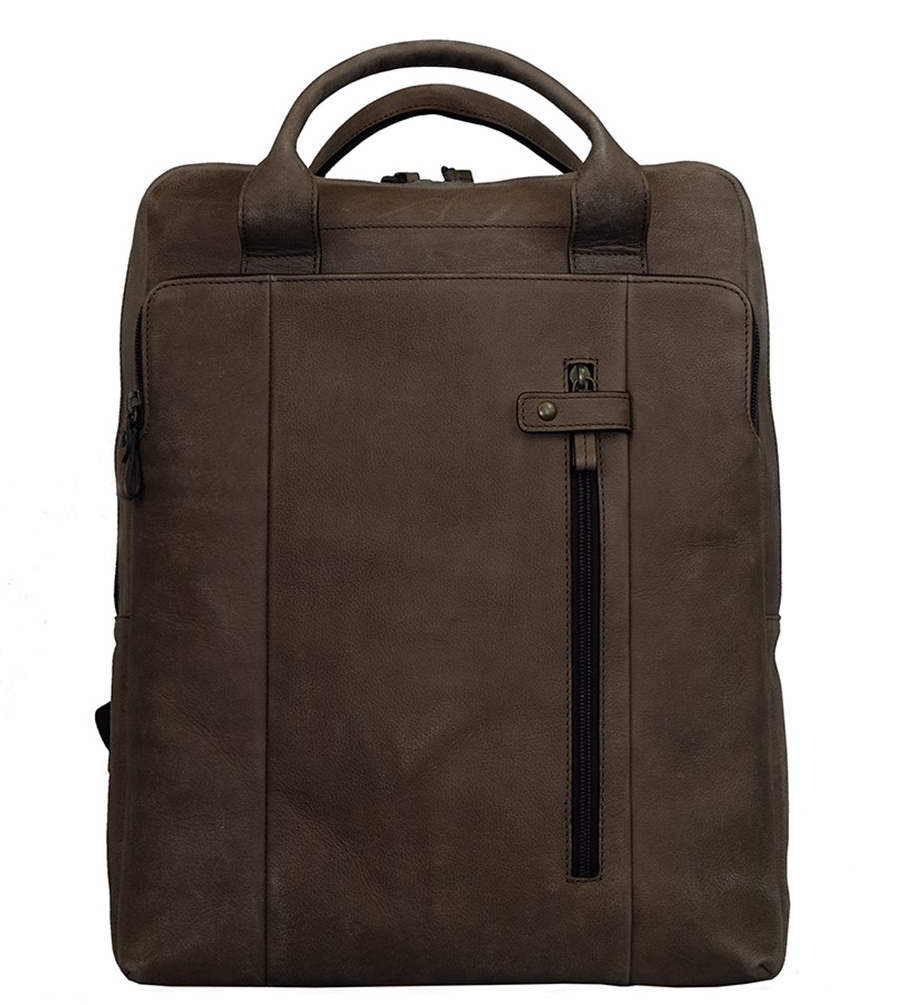
One of the most famous shool is Scuola del Cuoio di Firenze (leather school of Florence) located in the center of the city. The school prepares workshop, courses, and classes to learn the traditional processing by using old tools and machinery.
The craft skills, tradition and an entrepreneurial spirit able to grasp the needs of the market have allowed many Tuscan companies to position themselves on the market with production not only in the "tanning" but more specifically in the footwear sector, becoming one of the production companies more interesting in Italy.
LEATHER AND SHOES: A COMBINATION OF EXCELLENCE
Footwear manufacturing in Tuscany has not had an extremely defined development in past centuries.
The groups of artisans present, however numerous, have never given shape to a real district composed of shoe factories and producers of components (welts, soles, heels, laces, uppers) of the shoe, as has happened for example in the Riviera del Brenta.
The strength of this district, which could more correctly be defined as a system, is being able to attract many companies also from out of Tuscany and from abroad. For sure the presence of art and culture in Florence eased the interest by many Italian in the Tuscany area.
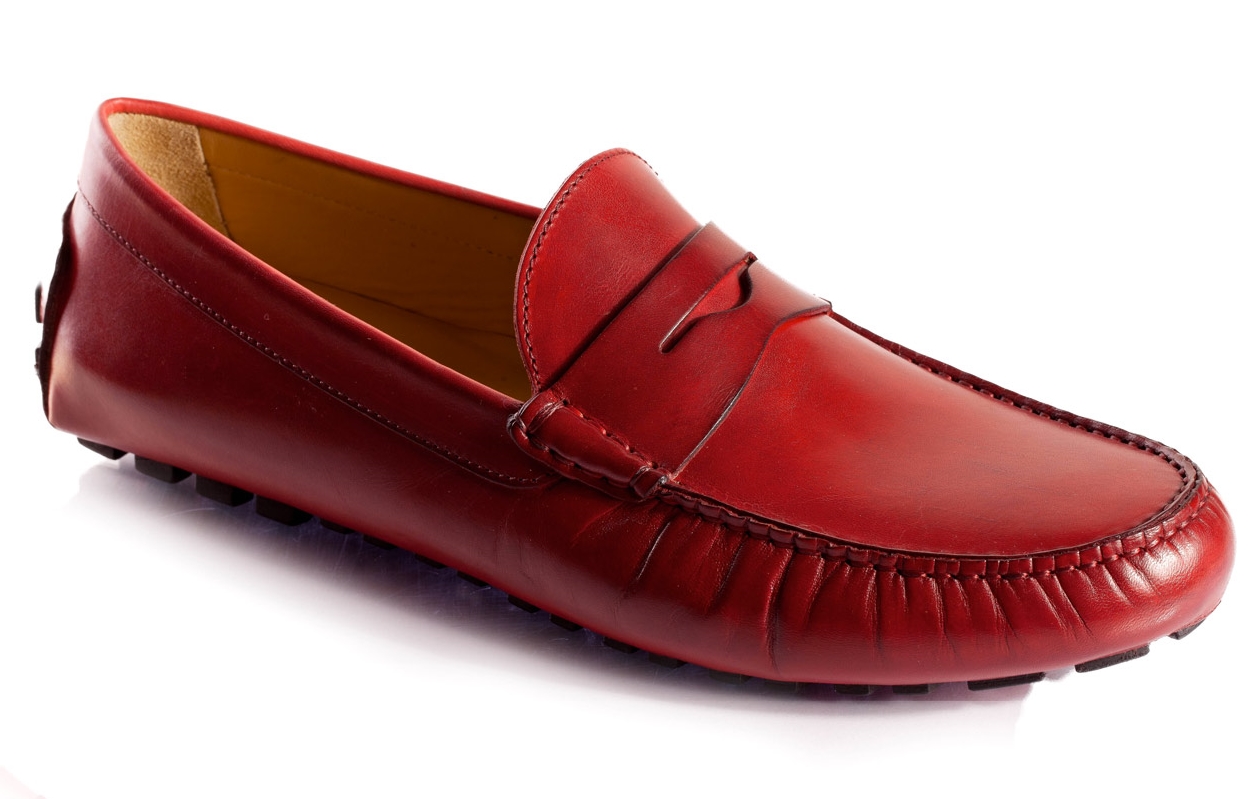
COMPANY OF THE TUSCAN DISTRICT: BRANDS AND NOT ONLY
The Tuscan production is well known by the presence of large companies - among all Gucci and Salvatore Ferragamo. In the truth on the territory there are a lot of small producers able to create products of high value, but are less known to the general public. If you do not know them, we suggest you take a look at these brands:
-
Elegance and comfort at the service of the great brands - MADAF, historic Tuscan shoe factory that with the line Mario Fagni manages to balance with wisdom and style the combination of innovation and craftsmanship, with an impeccable design but also comfortable, and lasting;
- Tuscany on you feet – BUTTERO, 100% made in Tuscany, has a wide collection of products from the American western boots to the most fashionable sneakers, with a very special style, and unmistakeble leather processing;
- Style and quality for womens - VICTOR SHOE FACTORY, a shoe factory specialized in production for women with high attention to the production materials (all made in Italy), to satisfy not only the customers of the Victor brand but also the customers and the most demanding big brands.