

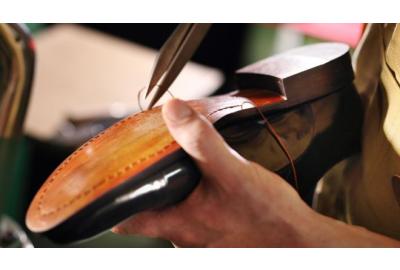
Rediscovering techniques and knowledge of the past can stimulate our creativity. It is an exercise that helps us - young and old - to better understand that many products can also be made with manual skills without complex machines or automated techniques, and moreover, because it brings out as some topics that today appear modern have actually already been considered in the past. An example? Sustainability and ethical use of materials.
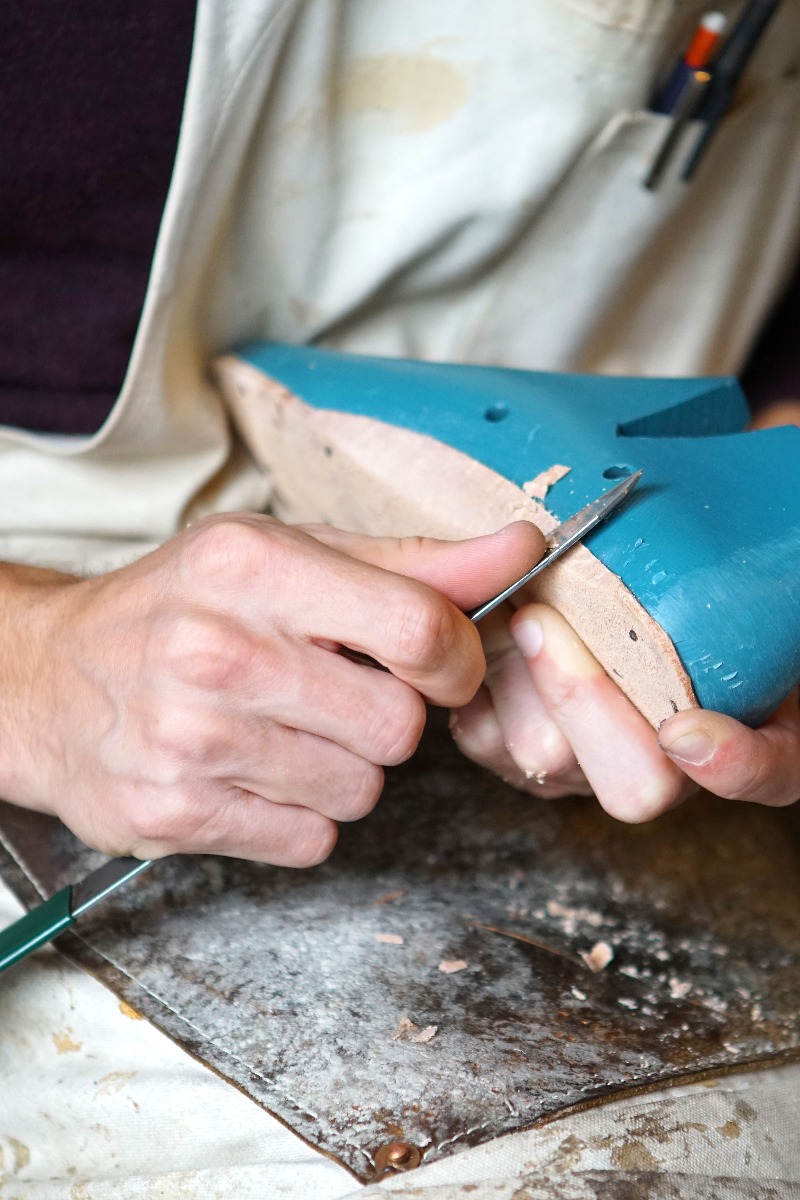
We decided to take you to the discovery of an ancient craft, full of charm and inventiveness: the tradition of shoemaking.
One of the trades that today risk being forgotten is certainly the shoemaker. It is an extremely useful trade for the community, once very rooted in the territory. It is true, all of us useless leather shoes and more trainers, but it is a pity that we throw away the shoes even when we can save them!
The shoemaker has an important role in the community: in Italy there is a huge number of local variations for this artisan (calegher, scarparo, solachianiello, scapparu, calié). The shoemaker was capable not only of repairing shoes, but sometimes also of producing them from individual components, adapting, modifying and make them last a long time. Because this yes - unlike in the past - a shoe was to be considered a durable good, certainly not a "disposable" one.
With a bit of surprise and curiosity, we have found a nice leather canvas containing words from the cobbler tradition that perhaps some of you have never even heard say. Someone else will know its meaning perfectly, but it will be equally fun to compare the exact meaning of each word.
A for Awl
The awl let the shoemaker to create holes in leather and pass into the sewing thread. The awl is one of the most representative tools for shoemaker with the hammer.
B for boot-stretcher
Sometimes boots don't have the same shape of legs and this could create a certain kind of discomfort. The shoemaker used boot-stretcher to enlarge the boot shaft without ruining it. Once upon a time the boot-stretcher it was only mechanic while today there is also the electric version.
C for cast iron tripod
this tool is extremely useful to keep fixed the shoe while the shoemaker is positioning nails, glue to repair it.
Dry cleaner
The shoemaker repairs and restore all the leather shoes. For nubuck and chamois leather the dry cleaner is the best. An abrasive pad to remove spots from chamois-leather shoes (but also bags and jackets)
E for Eyelet
Metal rings with which to garnish and reinforce the holes made on leather and fabric. The eyelets can have different diameters: from the micro (inner diameter smaller than 3.5 mm), standard (diameter from 4 to 6.5 mm) up to the large eyelets called sail, which used for the curtains. With punch, punch, and press the shoemaker performs the assembly of the eyelets.
F for Finishing
In the finishing process, the heels are attached, trimmed and cleaned with sandpaper for a smooth finish. Trim the edges is a material process highly specialized, for which the edges of the sole are trimmed following the shape of the last.
G for Glue
There are a lot of glues for shoemakers: for sole, uppers, for foam and leather. The shoemaker uses glue dispenser with a brush in order to save precious material and avoid to sully the shoes.
H for Hammer
Originally in steel and wood. The elongated pen serves to adhere to the various leather parts like those of the heel. The rounded and smooth head was used to beat the leather and drive the seed. The hammer for the shoemaker is like the pen for the writer. There are many types of hammer, to perform at best every job: for the heel, extra strong. There is even a hammer without a handle, to precisely beat the edges.
I for Iron nails
Iron nails tacks for shoes consist of a stem with a round portion for a comfortable sliding and a square section with a pyramidal tip. The nails are used to fix sole of the shoes.
K for Knife
The knife for shoemaker is in tempered steel and is a multi-tasking tool: it cuts leather, laces, sole guaranteeing sharpness and clean results. One of the most famous shoemaker knife is produced by Leone, an Italian historical brand.
L for leather / Lining
The leather is "the material": for centuries shoemaker used only leather and few other things to create shoes. In our opinion, there is no one other professional able to handle leather as the shoemaker.
M for (wooden) mold
The shoemaker used molds to create a new shape for its shoes. The mold was in wood and usually was used to give shape to uppers and even as support during the sewing operation.
N for Nails
The cobbler uses the nails, in the jargon known as "seed" to nail the sole. The seed "growing" slightly with humidity guarantees an exceptional hold.
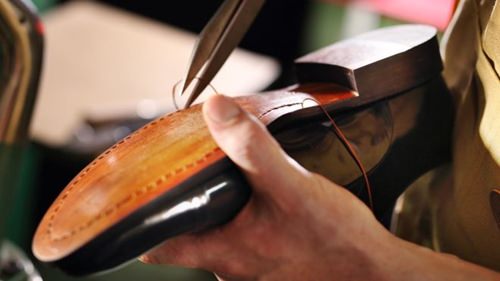
R for Rasp
A thin or coarse grain of various shapes to scrape or smooth the edges of the soles. A spoon is used to remove the heads of wooden glosses inside shoes.
S for Soles
Did you ever take your shoes to resole to the cobbler shop? This is one of the typical operations for a pair of shoes. It could seem strange but every shoe needs a pair of specific soles that the shoemaker has to arrange (shape, size, fitting).
T for twisted leather
Elegant and precious profiles and filaments in leather tied together to form a weave of great aesthetic prominence. Originally created from leather scraps, they are accessory elements that enhance the aesthetic value of shoes and bags.
U for Upper
The part or parts of a shoe that cover the toes, the top of the foot, the sides of the foot, and the back of the heel. The shoemaker knows how to repair...and sometimes even how to create it.
W for welt
A strip in soft leather a few thick and a couple of mm wide that is sewn to the upper, to the insole and to the sole for perfect waterproofing. Sold by the meter, they are cut directly during the creation or repair of the shoe. The welts can be smooth, sewn or marked.
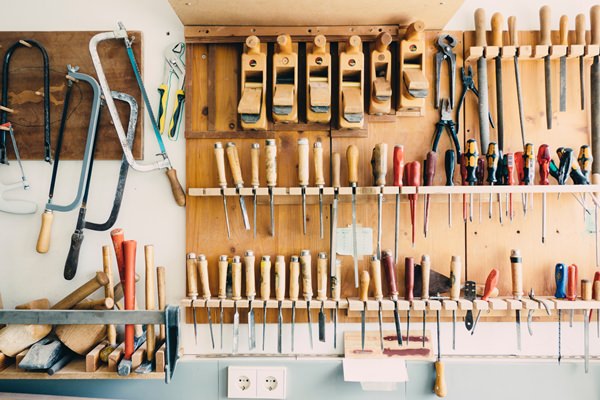
...As you noticed some letters are missing: surely there are words about shoemakers with V, O, X. If some of them come to your mind you can share them with us, giving also your explanation of their meaning!


